How Much Does It Cost to Become a Pilot? Honest Ranges
How Much Does It Cost to Become a Pilot?
In the United States, becoming a private pilot typically costs somewhere in the range of $12,000 to $20,000. Reaching a commercial pilot certificate — the point where you can legally be paid to fly — usually lands between roughly $50,000 and $120,000 in total if you start from zero, depending on the school, the aircraft, your pace, and how efficiently you build hours. Add the flight instructor certificate that most career-track pilots go on to earn after the commercial, and the top of that range moves to about $130,000. University aviation programs that bundle a degree with flight training can push the all-in figure well past $200,000.
Those are wide ranges, and that's deliberate. Anyone who quotes you a single tidy number is either simplifying or selling. Flight training is billed mostly by the hour, your progress depends on weather, aircraft availability, and how often you fly, and regulatory minimums are exactly that — minimums that most students exceed. This guide breaks the cost down stage by stage so you can see where the money actually goes, where students overspend, and how to decide whether the investment makes sense for you.
One note before the numbers: figures here are typical U.S. ranges as of publication, not quotes. Costs vary by region and country, and requirements are set by your regulator — always verify current rules with the FAA (or EASA in Europe) and get a written estimate from any school you're considering.
Pilot Training Cost by Stage
The path from zero experience to employable pilot runs through several certificates and ratings, each with its own price tag. Here's how the typical U.S. costs stack up.
| Stage | Typical cost (USD) | What it gets you |
|---|---|---|
| Discovery flight | $100 – $300 | A short intro lesson to confirm you actually enjoy flying |
| Medical certificate | $100 – $250 | Clearance to fly as a pilot — the class you hold governs which privileges you can exercise |
| Private Pilot License (PPL) | $12,000 – $20,000 | Fly yourself and passengers, not for pay |
| Instrument rating | $10,000 – $20,000 | Fly in clouds and low visibility by reference to instruments |
| Commercial certificate + hour building | $25,000 – $70,000 | The legal ability to be paid to fly, plus the flight hours to qualify |
| Multi-engine rating | $3,000 – $8,000 | Fly aircraft with more than one engine — expected for most airline paths |
| Flight instructor certificate (CFI, optional) | $5,000 – $12,000 | The most common first flying job and a way to build hours while earning |
Add the rows from the discovery flight through the multi-engine rating — everything on the way to being legally employable as a commercial pilot — and the total runs from about $50,000 to roughly $119,000. Call it $50,000 to $120,000 for planning. Most self-paced students at local flight schools land in the middle; accelerated academy students often sit near the top, because academies charge more to compress the timeline.
The CFI row sits outside that total on purpose: it is a post-commercial step, not a prerequisite for the commercial certificate, and plenty of people stop before it. If you plan to instruct — which most civilian career-track pilots do — budget for it too, and the realistic zero-to-employed range becomes roughly $55,000 to $130,000. Whichever scope you use, use it consistently. Quoting yourself the smaller number and then paying for the larger one is the classic budgeting mistake.
The discovery flight and medical: spend this money first
Before committing to anything, take a discovery flight — a short introductory lesson, usually $100 to $300. It is the least expensive way to answer the only question that matters at the start: do you actually like doing this?
If the answer is yes, get your medical certificate early, before you've sunk serious money into training. A first-class medical (the standard airline careers are built on) involves an exam with an FAA-designated aviation medical examiner and typically costs $100 to $250. If you have a medical history that could complicate certification — vision issues, certain medications, past diagnoses — resolving that before training protects the rest of your budget. Standards are set by the regulator and do change, so check current FAA guidance rather than forum threads.
Private pilot license: your first big line item
The private pilot license is where flight training gets real, financially. The FAA sets a minimum flight-hour requirement for the certificate, but the national average is meaningfully higher than the minimum — most students need considerably more time than the floor suggests, and budgeting for the minimum is the single most common way new students blow their estimates.
A realistic PPL budget of $12,000 to $20,000 typically covers:
- Aircraft rental, usually $140 – $220 per hour wet (fuel included) for a typical two- or four-seat trainer
- Instructor time, commonly $50 – $90 per hour
- Ground school and study materials, a few hundred dollars
- Written and practical exams, including the examiner's fee, often $800 – $1,200 combined
- Headset and supplies, roughly $300 – $1,100 depending on how nice a headset you buy
Frequency is the hidden cost driver. Students who fly two to three times a week retain skills between lessons and finish closer to the low end. Students who fly twice a month relearn material constantly and can spend thousands extra on repetition alone.
Instrument rating and commercial certificate
The instrument rating — training to fly by reference to instruments in clouds and poor visibility — typically adds $10,000 to $20,000. It's not optional for anyone with professional ambitions, and it's widely regarded as the training that most improves your actual flying.
The commercial certificate itself involves a modest amount of additional dual instruction, but the real cost is the flight-hour requirement behind it: the FAA requires a substantial total-time threshold for a commercial certificate (verify the current figure in the regulations), and the gap between where your PPL and instrument training leave you and that threshold must be filled with hour building — renting aircraft and flying. At typical rental rates, that gap is why the commercial stage is the widest, most personal range in the whole budget: $25,000 to $70,000 depending on how many hours you need to buy versus build creatively through shared flying, club aircraft, or partnerships.
After the commercial: the hours problem
A commercial certificate lets you be paid to fly — it does not make airlines call you. U.S. airline first-officer jobs generally require an Airline Transport Pilot certificate, which carries a much higher flight-hour requirement (with reduced thresholds for graduates of certain degree and military programs — again, current FAA rules govern). Most civilian pilots bridge that gap by working as flight instructors, which is why the CFI certificate, at $5,000 to $12,000, is best understood not as a cost but as the purchase price of your first aviation paycheck. For the full stage-by-stage career path, see our guide on how to become a pilot.
What Drives Flight School Cost Up or Down
Two students at the same school can finish the same certificate thousands of dollars apart. The dollar figures below are illustrative arithmetic using the rates quoted earlier in this guide, not survey data — but they show where the width in the ranges comes from.
- Training frequency. The strongest single predictor of total cost. Every lesson that starts by re-teaching last month's material is a lesson you paid for twice. At $140 to $220 an hour wet plus $50 to $90 for the instructor, ten extra dual hours is roughly $2,000 to $3,000 — and a student flying twice a month can lose more than that to repetition across the private certificate alone.
- How you buy hours. At the commercial stage you are mostly purchasing flight time, so the hourly rate you can access is the whole game. A club aircraft or partnership at $40 or $50 an hour below commercial rental, applied across the many hours of hour building, is most of the distance between the bottom and top of that $25,000 to $70,000 row.
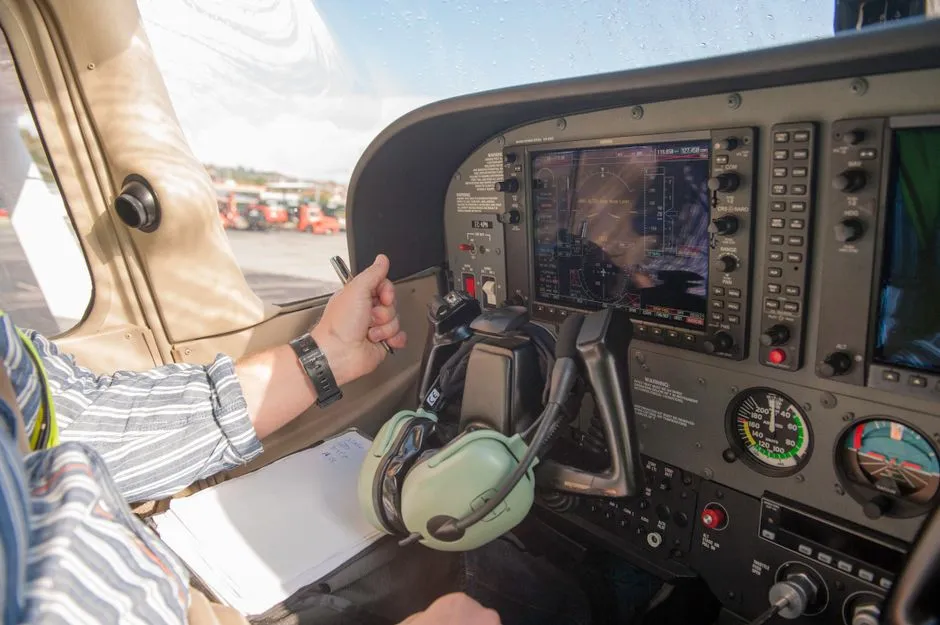
- Aircraft type. A modest older trainer may rent near the bottom of the $140 to $220 band while a new glass-cockpit aircraft sits at the top or above it. That $80-an-hour spread compounds across every hour of every certificate, and both aircraft produce the same piece of paper. Newer avionics are nicer to learn on; they are not required.
- School type. Local flight schools (FAA Part 61-style training) offer flexibility and pay-as-you-go pricing; structured academies (Part 141-style) offer efficiency and financing at a higher sticker price and with less scheduling freedom. The academy premium buys a compressed calendar, not a cheaper certificate.
- Location. Rental and instructor rates vary widely by region, and congested airspace quietly consumes paid engine hours. Fifteen minutes of taxi, run-up, and hold time per lesson is billed time — across a full certificate, easily a four-figure line item you never see itemized.
- Weather. Training where the weather is flyable most of the year shortens calendars and budgets. A cancelled lesson costs nothing directly, but a season of cancellations is the frequency problem in disguise.
- Checkride readiness. Failing a practical test means paying for retraining plus a second examiner fee, and examiner fees run several hundred dollars on their own. An extra lesson or two to be genuinely ready is almost always cheaper than a re-test.
None of these are exotic decisions. In combination they move more money than any discount a school will offer you.
The Cheapest Way to Become a Pilot
There is no secret discount, but there are structurally cheaper paths:
- Fly frequently at an affordable local school. Two or three lessons a week in an inexpensive trainer is the classic value play.
- Join a flying club. Member-owned clubs often rent aircraft below commercial rates, which matters most during hour building — the stage where you're buying the most hours.
- Do ground school before you fly. Knowledge that's cheap to learn on the ground is expensive to learn in a running airplane. Written-test prep done early saves flight hours later.
- Become a CFI and let the hours pay you. Instructing converts the most expensive phase — hour building — into a salaried one.
- Consider the military path. Military flight training costs no tuition, in exchange for a service commitment measured in years. It's the cheapest path in dollars and the most expensive in obligation.
- Be cautious with pay-large-sums-upfront deals. Flight schools do sometimes close. Favor pay-as-you-go or escrowed payments over big prepaid blocks, whatever the discount.
Two things that look cheap and usually aren't: ultra-accelerated programs chosen purely on sticker price, and financing a large sum before you've confirmed — via discovery flight, medical, and a few real lessons — that you'll actually finish.
Is Pilot Training Worth the Cost?
Honestly: it depends on which pilot you want to be.
As a career, the math can work well over a full working life, but it works slowly. Pilot pay is driven mostly by seniority, employer, and the size of the aircraft you fly, so the shape of the return matters as much as the size: entry-level flying jobs pay modestly while loan payments loom, and the strong years arrive later. Hiring is cyclical too — airlines hire in waves and freeze in downturns, and no school's marketing can promise you a class date. Rather than take a headline salary on faith, run your own numbers against the pay ranges by job type and seniority in our guide to how much pilots make, assuming the lean years last a while.
As a personal pursuit, a $12,000 to $20,000 private license buys a skill and a freedom very few people ever have. Whether that's "worth it" is a values question, not a spreadsheet question — but it's an honest amount of money, and nobody should pretend otherwise.
A reasonable decision rule: spend the small money first (discovery flight, medical, ground school), confirm both aptitude and appetite, and only then commit to the large money — with a written cost estimate, a buffer of 20 to 30 percent above it, and a financing plan you could survive if the timeline slips. It usually does.
The flying itself, most pilots will tell you, holds up its end of the bargain. Just walk in with your eyes open and your budget padded.